


Instability in 2026 rarely stayed contained to the country where it started. Our Global Risk Map tracks that spillover across political stability, civil unrest, crime, and conflict, and, for the first time, flags where risk diverges from the country-wide rating down to the city level. This analysis reviews the key developments shaping the global risk landscape in 2027.

|
September 23, 2026 INSIDE THIS ARTICLE, YOU'LL FIND: |
The events of the last year demonstrated how rapidly political, security, economic, and health risks can converge. The conflict in the Middle East disrupted global energy markets, public backlash against AI infrastructure spread across two continents, outbreaks of Ebola and Hantavirus strained public health systems and travel policy worldwide, and youth-led unrest reshaped domestic politics in multiple countries. Boundaries between physical and cyber risks, commerce and statecraft, and war and peace are blurring, and threat dynamics in this environment vary as much within a country as they do between them. The 2027 Global Risk Map is built around that reality.
Global Guardian’s Annual Global Risk Map presents security ratings based on a set of indicators that include crime, conflict, health, natural disasters, infrastructure, political stability, civil unrest, and terrorism. For the first time, the Risk Map identifies specific countries and cities driving arbitrary detention, violent crime, data exposure, and other risk factors, rather than assigning a single rating to an entire country. The conflicts, health emergencies, and unrest of 2026 are likely to mature into major drivers of international risk in the year ahead, with implications for firms operating across borders. Multinational organizations will have to adapt to and contend with these risks amid ongoing geopolitical and geoeconomic volatility.
A MORE GRANULAR RISK MAP
Building a Balanced Risk Map
Countries are not monolithic, and neither are the safety risks within them. By painting an entire country with the same brush, risk maps today fall short of providing decision makers with the information needed to properly evaluate the risks associated with travel or operations within a given country. The 2027 Global Risk Map strikes a balance, adding this granularity through new risk categories rather than a dense layer of icons.
Many risks are geography-bound. Environmental risks are inextricably tied to geography, and so too are risks derived from the density or sparseness of populations. Compared with rural areas, cities often have more developed infrastructure, stronger government control, and better services, including medical care. But even within a given country, certain cities are often safer than others. By contrast, most rural areas are insulated from the predations of urban criminality and protest-related disruption. But peripheral areas can face threats tied to weak government control, including the presence of bandits, traffickers, and insurgents, as well as elevated disease risk. The 2027 Global Risk Map illustrates these intra-national risk disparities, providing its users with the granularity to make more informed decisions.
NEW FEATURES
Highest Risk Cities
These cities have extremely high rates of homicide and other violent crime, driven by conflict between various organized criminal groups, quasi-state actors, and/or government forces. Travel to these destinations should only be conducted with careful planning and robust security measures.
Highest Arbitrary Detention Risk Countries
These countries have a record of detaining the citizens of national adversaries without legitimate cause to create diplomatic leverage. Foreigners are often detained on offenses that are either fabricated or rarely enforced, and detentions often coincide with a deterioration in diplomatic relations. Firms should evaluate the arbitrary detention risk profile of their specific travelers when considering travel and advise personnel on how to minimize their exposure if applicable. Risk factors can include citizenships held, professional, religious, and ethnic backgrounds, and public profiles.
Highest Health Risk Countries
These countries feature some combination of prevalent or endemic contagious diseases, underdeveloped healthcare infrastructure, and challenges with evacuation. Firms should consider personnel’s pre-existing risk factors when planning trips or operations in these countries.
Highest Environmental Risk Countries
Environmental risks are a product of two factors: the prevalence of extreme weather and seismic events, and a country’s capability to respond effectively. Countries with high levels of environmental risk can also face second-order effects, including food scarcity, infrastructure failure, protests, and looting. Firms should consider the timing of travel and conduct proper environmental assessments ahead of construction or acquisition of local sites.
Highest Data Exposure Risk Regions
These countries typically have relatively robust cyber capabilities, weak privacy protections, and tend towards more authoritarian approaches to policing dissent. Some of these states engage in commercial espionage and the theft of sensitive private sector intellectual property. Personnel traveling to these countries should carry a dedicated device (a “burner device”) loaded only with the data they need for the purposes of their trip, rather than a primary device with broader access.
How to Use This Map
The 2027 Global Risk Map is an enhanced awareness tool, not a risk intelligence panacea.
The 2027 Global Risk Map is the first, not the only, step involved in planning. The amount of pre-travel planning, diligence, and intelligence is commensurate with a destination’s risk level. While no location is risk-free, areas that are Medium Risk and above require more careful preparation.
The Medium Risk designation is where either non-security risk factors, such as medical evacuation challenges, or a combination of multiple risk factors coalesces to impact the overall risk rating. It is incumbent on the planner to identify the main risk factors of Medium Risk countries due to the variance of possible drivers or to seek guidance from a trusted security provider. For example, Cape Town, South Africa, and the Australian Outback share the Medium Risk rating for markedly different reasons: Cape Town is impacted by high levels of violent crime but has excellent healthcare; the Outback has low crime but has extremely limited infrastructure and access to healthcare.
The High and Extreme Risk designations indicate acute security threats. In these locations, non-essential travel is not recommended. For essential travel, proper security measures are a necessity.
For a detailed breakdown of variable intra-national risk level examples, click here.
risk changes in 2027
The 2027 Global Risk Map highlights both country- and region-specific safety risk ratings based on a series of indicators, including crime, conflict, health, natural disasters, infrastructure, political stability, civil unrest, and terrorism.
The year 2026 featured two global health emergencies (Hantavirus and Ebolavirus); the largest-ever disruption to the oil market following the closure of the Strait of Hormuz; and the introduction of artificial intelligence models with superhuman hacking capabilities. Each exposed the same vulnerability: decades of global integration mean that a health emergency in one country, the closure of a shipping lane, or one company’s technological leap can ripple across borders and industries alike, reshaping risk from one country to the next.
AREAS OF INCREASED RISK
AMERICAS
Cuba (Moderate → Medium Risk): Risk has increased amid the worsening conditions on the island. While the security environment has not changed, rolling country-wide blackouts, acute fuel shortages, and new sanctions on Cuba’s largest conglomerate and state oil company have pushed the power grid and healthcare system toward collapse.
Ecuador (Medium → High Risk): Risk has increased alongside the escalation of Ecuador’s mega-gang violence. The country now reports the highest homicide rate in the region, as its gangs, vying for control over cocaine trafficking, extortion, and illegal mining rents, are increasingly incorporating explosives, including car bombs, into their tactics. Compounding the situation is the government’s policy of open confrontation with the gangs, a policy that has so far failed to stem the violence.
MENA
Iran (High → Extreme Risk): Risk has increased amid the open-ended conflict with the U.S. and Israel. The war has compounded profound water management and economic challenges that prompted the largest protests in Iran since the 1979 Iranian Revolution. With a geopolitically less cautious and more repressive government in place, arbitrary detention risks have increased and the prospect of a return to large-scale conflict is significant.
Jordan | Qatar | UAE (Moderate → Medium Risk): Risk has increased in these nations owing to ongoing regional tensions. During the 2026 Iran War, Iran demonstrated that it can and will strike locally hosted U.S. military and key economic sites in these countries.
Saudi Arabia (Moderate → Medium Risk): Risk has increased in Saudi Arabia, driven by new geopolitical concerns. During the recent conflict, Iran has directly targeted Saudi Arabian oil and gas infrastructure and air bases while Iran’s partners in Iraq have also launched drone strikes on Saudi Aramco sites. The conflict also ended the Saudi-Houthi truce and rekindled the Yemeni Civil War, opening the possibility of further Saudi intervention in Yemen and Houthi attacks deeper into Saudi Arabia.
Bahrain | Kuwait (Moderate → High Risk): Risk has increased in Bahrain and Kuwait owing to the combination of their unique vulnerability to Iranian strikes and their high concentration of U.S. forces. In closer proximity to hostile forces and with the least developed air defense systems in the region, these nations will continue to face elevated geopolitical threats until the regional security picture stabilizes.
AREAS OF DECREASED RISK
AMERICAS
Jamaica (High → Medium Risk): Risk has decreased due to effective government strategies to combat crime and gang control. Between 2024 and 2025, Jamaica’s homicide rate fell by 40%, and preliminary 2026 figures show that crime continues to decrease. Questions remain about whether security improvements will be sustained once states of emergency are lifted and the military demobilizes from its current joint deployments with local police.
APAC
South Korea (Moderate → Low Risk): Risk has decreased following the stabilization of South Korea’s previously volatile domestic political situation. Despite the country’s deep political polarization, several factors suggest little appetite for major protest: the lack of political mobilization in response to the financial downturn, the sentencing of former President Yoon to life in prison in February 2026, and sweeping structural reforms enacted over the last year.
EURASIA
Hungary (Moderate → Low Risk): Risk of civil unrest in Hungary has decreased following the ouster of Prime Minister Viktor Orban and his Fidesz Party after 16 years of rule. In 2025, a combination of corruption scandals and government crackdowns on civil society drove thousands of people, as many as 200,000 at one pride protest in June 2025, to demonstrate against Fidesz leadership. Orban’s loss ends Hungary’s drift towards potentially destabilizing diplomatic isolation and removes the major driver for domestic civil unrest, reducing its risk level.
2026 In Review: Global Developments
Latin America: The Killing of El Mencho
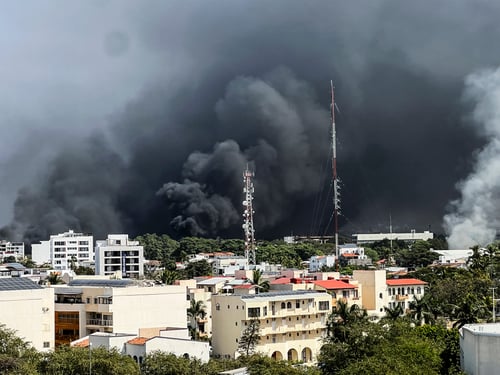 The 22 February 2026 killing of Cartel Jalisco Nueva Generación (CJNG) boss Nemesio Oseguera Cervantes (“El Mencho”) marked a defining moment for Mexico’s security landscape. The killing of the leader of Mexico’s most powerful cartel during a Mexican military operation sparked shootouts, vehicle burnings, and other paralyzing security incidents across much of Mexico. Though the scale and intensity of the ensuing backlash were unprecedented, the event followed the historical precedent of the last two decades, encapsulating the state of play for both authorities and criminal groups. The Mexican military operation, enabled by U.S. intelligence, followed a pattern seen in many operations against high-profile drug lords in Mexico. The criminal response, broadly intended to cause chaos and terror through a violent public backlash, is a strategy that has been employed since the early 2010s across Mexico. However, this event stands out, having been precipitated by external pressure rather than by domestic political concerns.
The killing of El Mencho and ensuing criminal backlash provide a model for what an expanded U.S.-pressured campaign against top cartel leadership may bring over the next year. The Trump administration has used the threat of unilateral military action against Mexican criminal groups as a lever for concessions on trade, expanded security cooperation, and migration control. This lever is effective, as Mexico views direct U.S. intervention as a violation of national sovereignty. The 2025 designation of several Mexican cartels as Foreign Terrorist Organizations forced Mexico to militarily engage more directly with its criminal organizations. In April 2026, the Trump administration broadened its fight against organized crime by indicting suspected corrupt officials in President Sheinbaum’s Morena party, further increasing pressure on the Mexican government.
Implications
As the Trump administration continues to pressure Mexico’s government to capture cartel kingpins, localized reprisals will increase in frequency. Beyond the immediate retaliatory attacks, captures of leadership will increase the likelihood of group fracture, as faction leaders within an organization violently contest control of the cartel with each other, initiating protracted periods of escalating shootouts, kidnappings, and disappearances.
North America and Europe: Data Center Opposition
Over the past year, public opposition to data centers has swelled on both sides of the Atlantic, growing from isolated local grievances to regional and national movements. A March 2026 Gallup poll found that 70% of respondents in the U.S. oppose new AI data centers being built in their neighborhood. There are now over 800 data center opposition groups (still mostly online) active across 49 states, with more than 525,000 Americans joining them to resist the construction of these facilities. As a result, at least 75 data center projects valued at around USD 130 billion were blocked or delayed in the first quarter of 2026 alone, and more than 300 state-level data center bills were filed in the first six weeks of 2026, with moratorium proposals introduced in 14 states.
Though most resistance to data center growth has been peaceful, the April 2026 shooting of an Indianapolis councilman’s home and attempted arson at OpenAI CEO Sam Altman’s residence demonstrate that the potential for violence exists. The suspects in a June 2026 foiled plot to detonate explosive-laden drones over the UFC Freedom 250 event outside the White House listed data center water usage among their grievances.
Meanwhile, despite hosting fewer than half as many data centers as the U.S., Europe is experiencing mounting resistance, similarly driven by strains to local resources and distrust of tech firms’ growing influence over land, energy, and local decision-making. Increases to household power bills in hotspots such as Dublin and Frankfurt are prompting environmental groups and locals to take regulators to court and fueling protests and vandalism across the continent. Among them is the anarchist Vulkangruppe in Germany, which claimed responsibility for the January 2026 arson attack at a power plant in Berlin that left 50,000 households and businesses without power for days.
Implications
Political and security risks around data center expansion have moved from background noise to an essential planning consideration. Establishing social media monitoring and long-term sentiment tracking programs allows firms to anticipate local grievances and address misinformation before political opposition forces project cancellations. Plainclothes executive protection is recommended for U.S. events such as public hearings and visits to data center construction or proposed sites. Residential camera surveillance and residential security teams are also recommended for executives, especially those who have received threats.
Global Health: Ebola and Hantavirus
 In the past year, two major outbreaks have prompted the greatest infectious disease concerns since the COVID-19 pandemic. In May 2026, an outbreak of Hantavirus on a cruise ship, the MV Hondius, infected 13 people, of whom three ultimately died. While small, the outbreak garnered global attention. Also in May 2026, an outbreak of the Bundibugyo strain of the Ebolavirus was discovered in the eastern regions of the Democratic Republic of Congo (DRC). While the outbreak was announced on 15 May, transmission likely began as early as January.
With over 7,200 confirmed cases and more than 3,450 confirmed deaths since 15 May, this outbreak is already the second-largest Ebolavirus outbreak on record. The current outbreak is also spreading more rapidly than previous outbreaks, having reached 1,000 confirmed cases within 40 days of initial classification compared with 235 days for the previous 2018 outbreak. The response in the DRC has been hampered by ongoing conflicts in the region, including the occupation of two of the provinces most affected by Ebolavirus, North and South Kivu, by the Rwanda-backed M23 movement. The U.S. government has barred all non-U.S. passport holders from the DRC, Uganda, and South Sudan from traveling to the United States, and U.S. passport holders must now follow special guidelines for re-entering the country.
Implications
Even small and highly contained outbreaks may induce government responses that can impede travel for millions of people. These outbreaks underscore the importance of having real-time travel intelligence to raise awareness of medical risks and dynamic travel restrictions, on-call telemedical support, and access to specialized aeromedical transport services.
Eurasia: The War in Ukraine
The war in Ukraine reached an inflection point earlier this year with Kyiv effectively seizing the conflict’s initiative. Russia’s advance has slowed to a crawl, and in some areas, Russian forces have lost territory. Where Russia has advanced, it has done so at great cost. Comparing June 2026 to June 2025, Russia’s rate of advance is 16 times slower and 19 times as costly.
Ukraine’s success is largely attributable to the effective employment of drones across multiple depths of fighting. Along the frontline, first-person-view (FPV) drones are now responsible for the majority of casualties. Behind the front, there is a 40-kilometer-deep band of territory, where troops on both sides can be identified by surveillance drones and attacked by FPV drones, artillery, or air assets. Ukraine has also successfully employed long-range drones and cruise missiles to strike Russia’s 11 most productive refineries, pushing Russian refinery levels to a 24-year low and causing fuel shortages across the country.
In response, Russia has stepped up its strategic bombardment campaign. Strikes on urban centers have become more deadly over time as Russia increases its use of ballistic missiles, and Ukraine’s access to sophisticated air defense systems remains limited. While Ukraine may hold a slight advantage, neither side is willing to make the concessions the other side requires, and a peace deal is likely still months to years away.
Implications
Travel to Ukraine will likely become more dangerous in the coming months as Russia has historically reacted to battlefield stagnation by intensifying its bombardment and sabotage campaigns. Likewise, Russian sabotage in Europe, particularly involving drones and airports, is becoming increasingly overt, and it could lead to more frequent transportation disruptions and flight cancellations.
Middle East and North Africa: Operation Epic Fury
The 2026 Iran War was the most disruptive event of the year, and it remains unresolved. On 28 February, the U.S. and Israel jointly launched a surprise attack on Iran, killing Iran’s Supreme Leader Ali Khamenei and many high-ranking security officials. The stated goals of Operation Epic Fury were to destroy Iranian offensive missile and drone capabilities, annihilate the Iranian navy, dismantle the nation’s defense industrial base, curb Iran’s proxy network, and ensure Iran can never obtain a nuclear weapon.
Iran countered by launching decentralized strikes on U.S. and Israeli military sites and infrastructure across the Gulf and in Israel, and by attacking ships transiting the Strait of Hormuz. Iran’s strategy has been to raise the global economic and political costs for the U.S. by curtailing regional petrochemical production and exports. Freedom of navigation through the Strait of Hormuz, long underwritten by the U.S. Navy, has become the defining issue of the conflict, and a return to the status quo ante now appears improbable.
U.S. officials claim a 90 percent reduction in Iran's missile, UAV, and naval production capacity; the pace of reconstitution, particularly in the drone sector, remains unclear. Iran has demonstrated that it still possesses the capacity to threaten international shipping in the Strait of Hormuz and critical infrastructure in the Gulf. Elements of Iran’s nuclear program still exist, including 440 kilograms (970 pounds) of highly enriched uranium underneath the Isfahan nuclear complex and an unknown quantity of accessible centrifuges that are presumed to be at its intact and deeply buried Pickaxe Mountain site.
Iran’s new leadership is less risk-averse, more repressive, more regionally aggressive, and more amenable to openly pursuing a nuclear weapon than it was prior to 28 February. The former elements of the government that were more open to negotiation and concerned with Iran’s economic situation have also been sidelined, diminishing the already low likelihood of a definitive resolution to the conflict.
Implications
With tensions over Iran’s nuclear program unresolved, further conflict is likely before President Trump’s second term ends in 2029. Businesses should evaluate their exposure to the Gulf nations, especially Bahrain and Kuwait, which are uniquely vulnerable to Iranian aggression. Supply chain exposure to goods that transit the region’s two maritime chokepoints, the Strait of Hormuz and the Bab el-Mandeb Strait, should also be assessed.
HOW BUSINESSES SHOULD PREPARE
The 2027 Global Risk Map gives risk management teams a starting point for a harder question: where are the blind spots in how we're protecting our people, assets, and operations? Answering it well takes more than the map alone.
Pairing this analysis with tabletop exercises helps confirm that continuity plans actually hold up against the risks in front of them, geopolitical instability, crime, conflict, terrorism, and natural disasters among them. The goal isn't just awareness of global hotspots, but a tested plan for what happens when one of them affects your operations directly.
Corporate risk exposure no longer tracks neatly with corporate footprint. A company with no facilities in a conflict zone can still see its supply chains, market access, or cyber infrastructure disrupted by events unfolding thousands of miles away. It is incumbent on corporate decision-makers to walk through the "what-if" and explore various scenarios that could arise from the current threat landscape to promote resiliency and business continuity.

Global Guardian's annual Risk Map displays country-specific security risk levels based on a series of indicators including crime, conflict, health, natural disasters, infrastructure, political stability, civil unrest, and terrorism. This year, the map goes further, flagging the specific countries and cities driving five distinct risks: crime, arbitrary detention, health, environmental, and data exposure.
To download your copy, complete the form below.