


INSIDE THIS ARTICLE, YOU’LL FIND:
Key Takeaways → What is HALO? → Core Features → What Makes HALO Different → Frequently Asked Questions →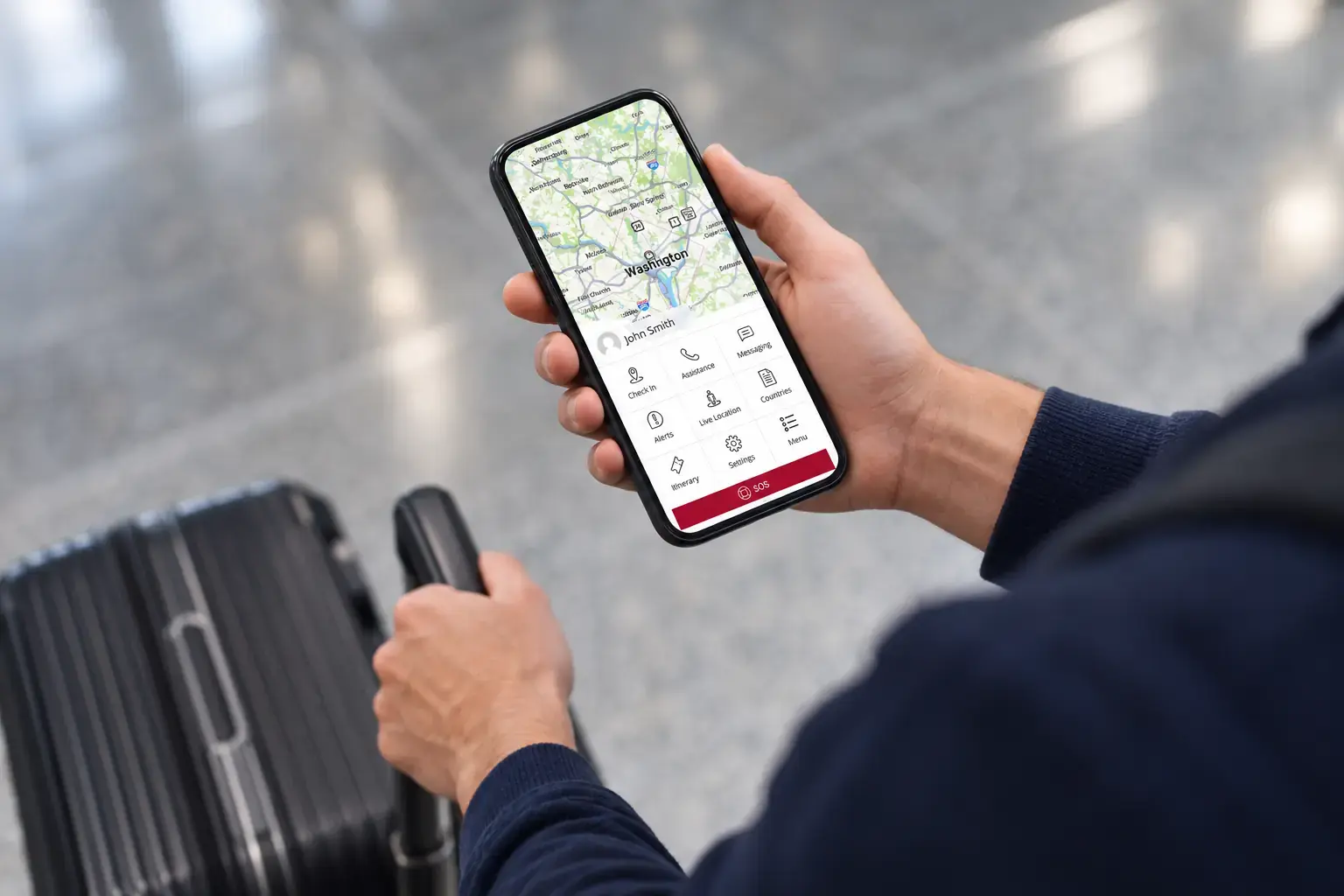
The gap between the alert and the action
When a traveler's world changes without warning, what matters is who reaches them, and how fast. Duty of care is a responsibility the organization carries. It is tested in the seconds after an alert fires.
Business travel is moving at record scale. According to the GBTA, global business travel spending is projected to reach a new historical high of $1.57 trillion USD in 2025. More trips mean more exposure, and more moments where risk arrives at the seams.
This article answers: what actually closes the space between an alert and someone acting on it. The answer is a platform wired to the people who respond, it is not simply a tool that warns.
Key Takeaways
-
What It Is: HALO is Global Guardian's Intelligence and Response Platform, pairing real-time intelligence with direct access to our 24/7 Operations Center.
-
Notify versus act: Other platforms stop at the alert. HALO wires the alert to operators who respond, with no handoffs.
-
Before, during, after: HALO protects across every trip stage, from pre-trip briefings to live tracking to crisis response.
-
Core features: Travelers use one-tap SOS, messaging, and alerts; managers see every traveler on one screen.
-
Built on a standard: HALO supports duty of care aligned to the ISO 31030 travel risk management standard.
What is HALO: Intelligence and Response Platform?
A warning alone cannot help a traveler in trouble. Global Guardian built HALO, our Intelligence and Response Platform, to close that gap. It is the successor to our Travel Guardian Platform, rebuilt around response.
In plain terms, HALO pairs real-time intelligence and situational awareness with direct access to our 24/7/365 Operations Center. It is not a standalone alerting tool. It is one Intelligence and Response Platform where the warning and the response live together.
Employees download Global Guardian HALO from the Apple App Store and Google Play. Once it is installed, a traveler is connected to our operators before a trip even begins.
How HALO protects travelers before, during, and after a trip
Protection extends beyond a single event. It runs the length of a trip, from planning to the flight home.
Each stage builds on the one before it. Intelligence gathered early shapes the response if something goes wrong later.
Before travel
Preparation starts long before departure. Every traveler gets country-level risk ratings and current threat intelligence for the destination. Itineraries sync automatically, so we know where people are headed.
Travelers review local conditions through resources like our Global Risk Map, and analysts consult ahead of higher-risk trips. The aim is simple: no one deploys blind.
During travel
Once a trip is underway, HALO keeps watch. Travelers receive real-time alerts for security, health, and environmental risk, each tied to their location. Live Location and Check-In hold a current picture of where people are.
If a threat develops nearby, automated proximity monitoring flags it early. Travelers can message an Operations Center analyst directly, at any hour. Visibility is not the goal here; it is the setup for acting fast.
In a crisis
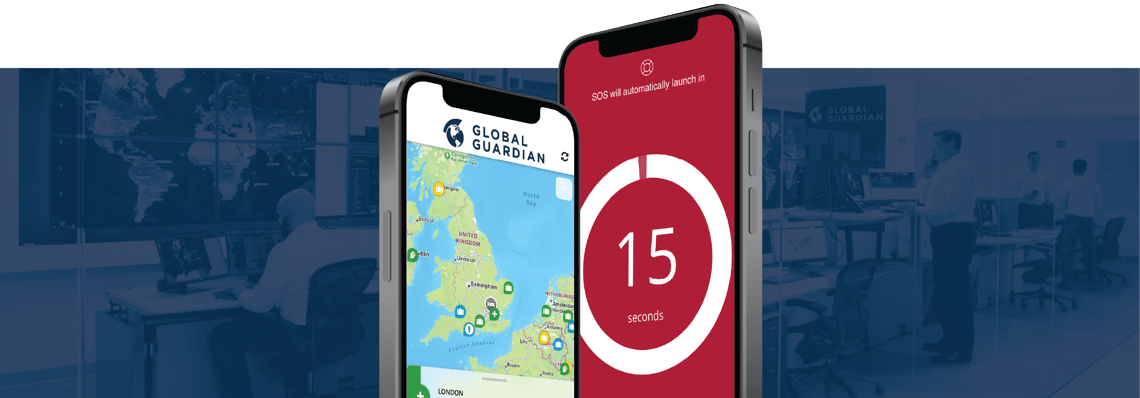
Speed decides outcomes when a situation turns. A single press of one-tap SOS opens an immediate line to our Operations Center. Operators do not just log the call; they move.
Take a medical emergency abroad. That one-tap SOS reaches an analyst, our physicians triage the case, ground support mobilizes, and, when needed, we arrange air ambulance and medical evacuation. In a facility threat, our geofencing identifies every employee inside the affected area, and protective assets deploy while we confirm each person is safe.
The incident stays open until people are clear. That is the difference between notification and extraction.
Inside HALO: core features travelers and managers use
Travelers and managers see two sides of the same system. For the traveler, the HALO app puts help one tap away. One-tap SOS opens a line to our Operations Center, and Messaging connects them to a live analyst.
Check-In and Live Location keep a traveler's status current. Alerts flag security, weather, transport, and health risks as they emerge. The Countries feature gives destination intelligence and risk ratings, Assistance places a call to our Operations Center, and Itinerary ties each alert and response to the trip at hand.
Managers see the other side. The admin access draws every traveler, asset, geofence, and alert into a single operating picture, monitored 24/7/365. HALO tracks travelers two ways: actively through the mobile app, and passively through PNR, the passenger name record created when a trip is booked. Booking data places a traveler on the itinerary, and the app confirms where they are now.
What makes HALO different from other travel risk management platforms
Most travel risk management platforms end where the danger begins. They identify a threat, warn the people affected, and prescribe an action. Then they hand off.
We built HALO the other way around. The platform is wired straight to the people who respond: our Operations Center and Global Guardian's in-country network, not a contractor on the other end of a ticket. One organization, one operations center, one command.
Our operators have been field-proven since 2012, backed by 140+ in-country teams and drawn from a leadership network that includes the CIA, SEALs, Army Special Forces, State Department, and U.S. Federal Agents. Together, they have coordinated thousands of complex missions globally. We measure success by resolution, not by how fast an alert goes out.
The visibility gap is real, and most platforms leave it unsolved. A GBTA survey of travel managers in the U.S. and Canada found the scale of it: Most travel managers (67%) said their company's air travel leakage increased (19%) or stayed the same (48%) over the past year. Hotel leakage is an even bigger challenge, with a total of 81% reporting that it grew (24%) or stayed the same (57%).
Leakage means trips booked outside the managed channel, which is exactly where a traveler can drop out of view. A traveler we cannot see is a traveler we cannot reach. HALO closes that gap by ingesting itineraries directly from travel management systems.
How HALO supports duty of care and ISO 31030
An obligation, not a policy. In law and in ethics, an employer must take reasonable steps to protect the people it sends into harm's way. HALO turns that duty into something operational.
ISO 31030 is the international standard that gives organizations a structured way to build, run, and review a travel risk management program. Published in 2021, it ties travel risk to broader workplace safety. HALO supports duty of care aligned to that standard.
Structured management matters because travel risk is physical, not abstract. The U.S. Bureau of Labor Statistics reports that transportation incidents continue to be the most frequent type of fatal event, accounting for 38.2 percent of all occupational fatalities in 2024. That figure covers all U.S. workers, not business travelers specifically, but it shows why movement deserves managed care.
For organizations that need full operational response behind the platform, our Duty of Care Membership connects employees directly to our Operations Center before, during, and after a crisis. Boards carry this responsibility too, which we cover in our guide to executive travel risk.
How to choose a travel risk management platform
The right choice comes down to one test: what happens after the alert. Start with visibility. A strong platform tracks travelers both actively, through the mobile app, and passively, through booking data, so no one is missing from the picture.
Look for verified, human-checked alerts tied to each traveler's location, not raw noise. Look for two-way communication with a live operator, not an automated reply. Look for a manager control center that shows the whole footprint at a glance.
The most important test is the last one. Does the alert connect to a team that acts? A notification tool warns you; an accountable response partner owns what happens next.
That is the standard we hold. The intelligence to anticipate. The presence to act. The response to own the outcome.
Frequently Asked Questions
Is the HALO App available on iOS and Android?
Yes. Global Guardian HALO runs on any standard iPhone or Android phone, and it needs no wearable or extra device to work.
Who uses HALO inside an organization?
Travelers carry the mobile app, while security, risk, HR, and travel management leaders work from the manager control center. Each role sees the view built for it.
Does HALO replace a travel management company?
No. HALO takes itinerary feeds from travel management systems and works alongside the existing booking workflow. Trips booked outside that workflow can be added to HALO manually, and the app's Live Location and Check-In show where a traveler is, whatever the booking source.
How fast does Global Guardian respond when a traveler uses the app?
A single press of one-tap SOS opens an immediate line to our Operations Center, where a live operator, not a call queue, coordinates help through our in-country teams.