This collaboration integrates an elite security infrastructure with world-renowned medical experts to provide a comprehensive global protection platform
“We’re not starting at zero. We’re both starting at minus 1,000 because neither side trusts each other at all.”
Global Guardian Vice President of Client Risk Management Seth Krummrich was featured in Fox News Digital examining how deep mistrust is shaping negotiations with Iran and the potential military pathways if talks collapse.
In the article, Krummrich outlined how a breakdown in diplomacy could lead to phased escalation focused on degrading Iran’s military capabilities, while warning that actions targeting critical infrastructure carry long‑term risks for regional stability and global energy markets.
“We are showing tactical and operational competency, but it’s showing this big disconnect with our strategic goals.”
Global Guardian Vice President of Client Risk Management Seth Krummrich joined ABC News to assess the growing strain on the fragile ceasefire between the U.S. and Iran amid continued tit‑for‑tat attacks and stalled negotiations.
During the interview, Krummrich warned that without progress toward a durable ceasefire framework—including clear implementation and enforcement mechanisms—current dynamics risk pushing the conflict farther from a lasting peace and closer to renewed escalation with global economic implications.
“Just as organizations invest in cybersecurity to prevent breaches or in compliance teams to avoid regulatory penalties, they must invest in infrastructure that mitigates leadership risk.”
Executive protection isn’t just about individual safety—it’s enterprise risk management. In an article for Security Magazine, Global Guardian Deputy Vice President of Operations Colin O’Brien explains why organizations need to rethink how they approach leadership risk in today’s environment.
As executives become more visible and exposed, protection must evolve beyond a reactive model to safeguard continuity, reputation, and organizational stability.
“Iran’s dashboard warning light is coming on now. They are going to face a catastrophic domestic problem because their economy’s collapsing and their infrastructure is collapsing.”
Global Guardian Vice President of Client Risk Management Seth Krummrich joined NewsNation to assess how mounting domestic economic and infrastructure strain is shaping Iran’s negotiating posture amid continued U.S. pressure.
During the interview, Krummrich noted that approaching summer conditions—including heightened water and power stress—are likely to intensify internal pressure, narrowing Iran’s margin for delay and accelerating decision points as economic and social strains compound.
“I call this week strategic ambiguity. On Friday, we were cautiously optimistic. On Monday, we were cautiously pessimistic.”
Global Guardian Vice President of Client Risk Management Seth Krummrich joined ABC News to assess renewed peace talks, shifting military signals, and the indicators organizations should monitor as tensions between the U.S. and Iran continue to evolve.
During the interview, Krummrich outlined how simultaneous diplomatic engagement and increased military posture reflect behind‑the‑scenes negotiations, cautioning that continued volatility requires organizations to plan for multiple potential outcomes.
“With no economy, failing basic social services, no alternate political or governmental option, and no global friends to save them, a serious humanitarian disaster is brewing in Iran.”
Global Guardian Vice President of Client Risk Management Seth Krummrich was featured on CNBC discussing how the ongoing war and blockade of the Strait of Hormuz are accelerating Iran’s economic collapse and narrowing its negotiating options.
In the article, Krummrich assessed the scale of infrastructure damage, inflationary pressure, and fiscal strain facing Iran, warning that prolonged disruption to energy exports and trade routes could exacerbate humanitarian and regional instability.
“Tensions in the Middle East have reinforced the analysis of maritime trade and supply chain vulnerabilities.”
Global Guardian Head of Research and Intelligence Zev Faintuch was featured in fDi Intelligence, a publication of the Financial Times, examining how renewed conflict in the Middle East has heightened risks tied to maritime chokepoints and global trade flows.
In the article, Faintuch highlighted how disruption in critical waterways—particularly the Strait of Hormuz—underscores the global economy’s exposure to concentrated trade routes for energy, fertilizer, and other key commodities.
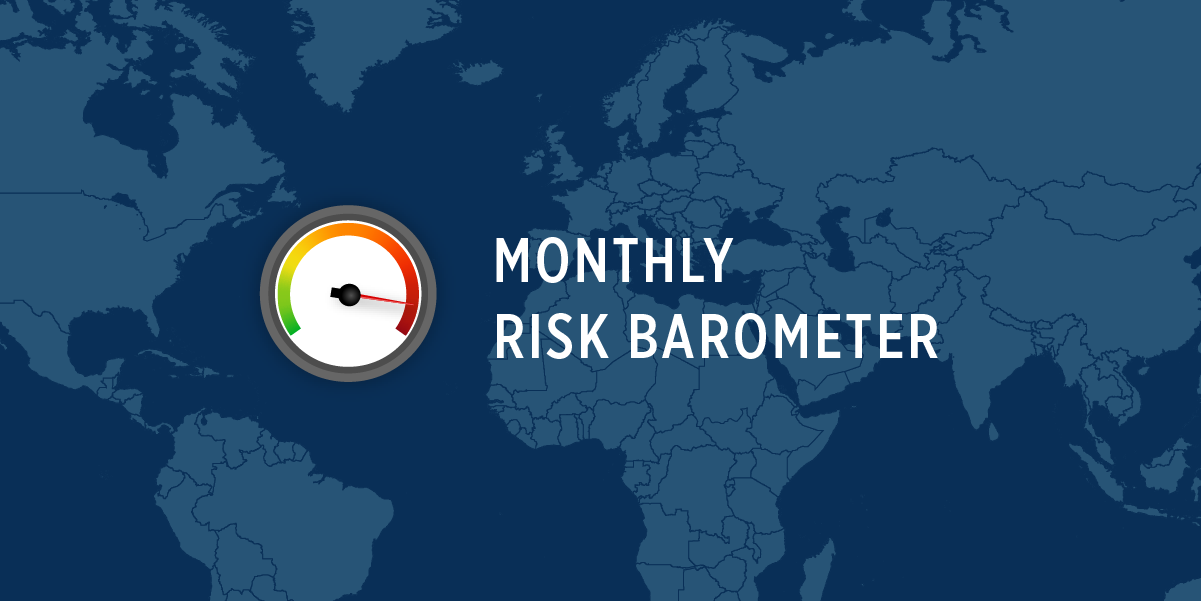
In Global Guardian's monthly Risk Barometer, our Intelligence Team highlights current global hotspots with the potential to impact your business operations and travel. Read below for analysis on the threats we are closely monitoring this month and click here to subscribe for regular intelligence updates.
“If Iran can’t ship their oil, we assess they have about two weeks’ worth of oil storage before it must shut down its oil wells. This is our risk timeline that’s going to drive the negotiation timelines.”
Global Guardian Vice President of Client Risk Management Seth Krummrich joined ABC News to assess the risks and implications of the ongoing naval blockade, including how pressure on Iran’s energy exports could accelerate negotiations or trigger escalation.
During the interview, Krummrich outlined key indicators organizations should monitor, warning that disruption in the Strait of Hormuz—or coordinated attacks on regional infrastructure—could create significant global economic consequences well beyond the Gulf.


© Copyright 2024 Global Guardian. All Rights Reserved. | Privacy Policy | Do Not Sell or Share My Personal Information | Privacy Rights Request Form | XML Sitemap | HTML Sitemap
Global Guardian needs the contact information you provide to us to contact you about our products and services. You may unsubscribe from these communications at any time. For information on how to unsubscribe, as well as our privacy practices and commitment to protecting your privacy, please review our Privacy Policy.